Data Thinking Series
Learn how experienced Data Scientists think before they write code. The mindset behind data analysis, machine learning and AI: instead of memorising Python, SQL or Pandas commands, you learn how professionals ask questions, understand business problems, validate data, and make better decisions in the age of AI.
Most tutorials teach syntax.
This series teaches thinking.
Every lesson explores how experienced Data Scientists approach real-world problems before touching Python, SQL, dashboards or machine learning. Each article builds on the one before it, so the series is meant to be read in order.
It is written for aspiring Data Scientists, Data Analysts, AI practitioners, students and working professionals who would rather think like experts than memorise commands. The examples come from customer churn, sales, HR, healthcare, marketing and finance, because that is where these questions actually get asked.
The lessons
- 1
Part 1 · 12 min
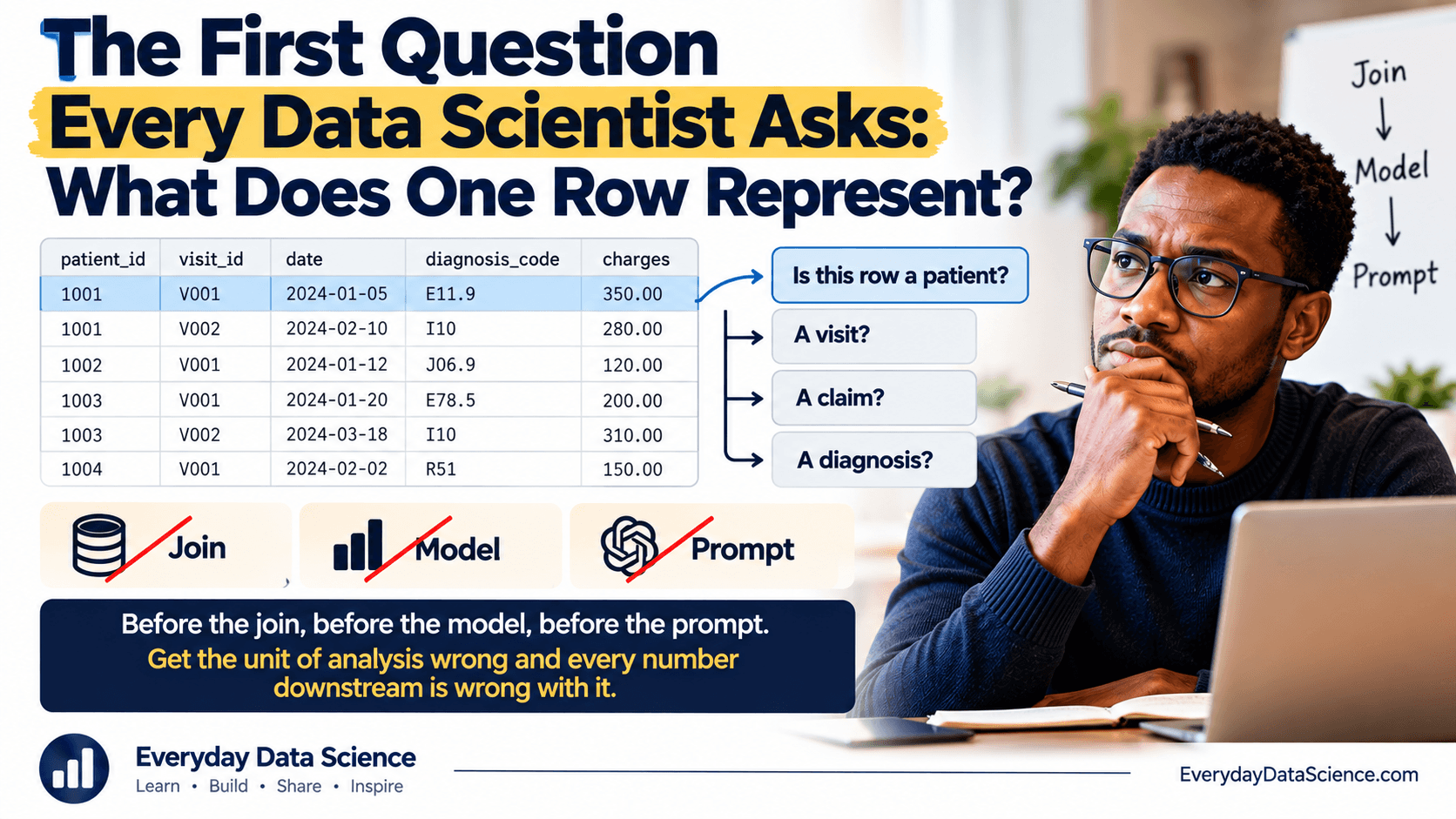
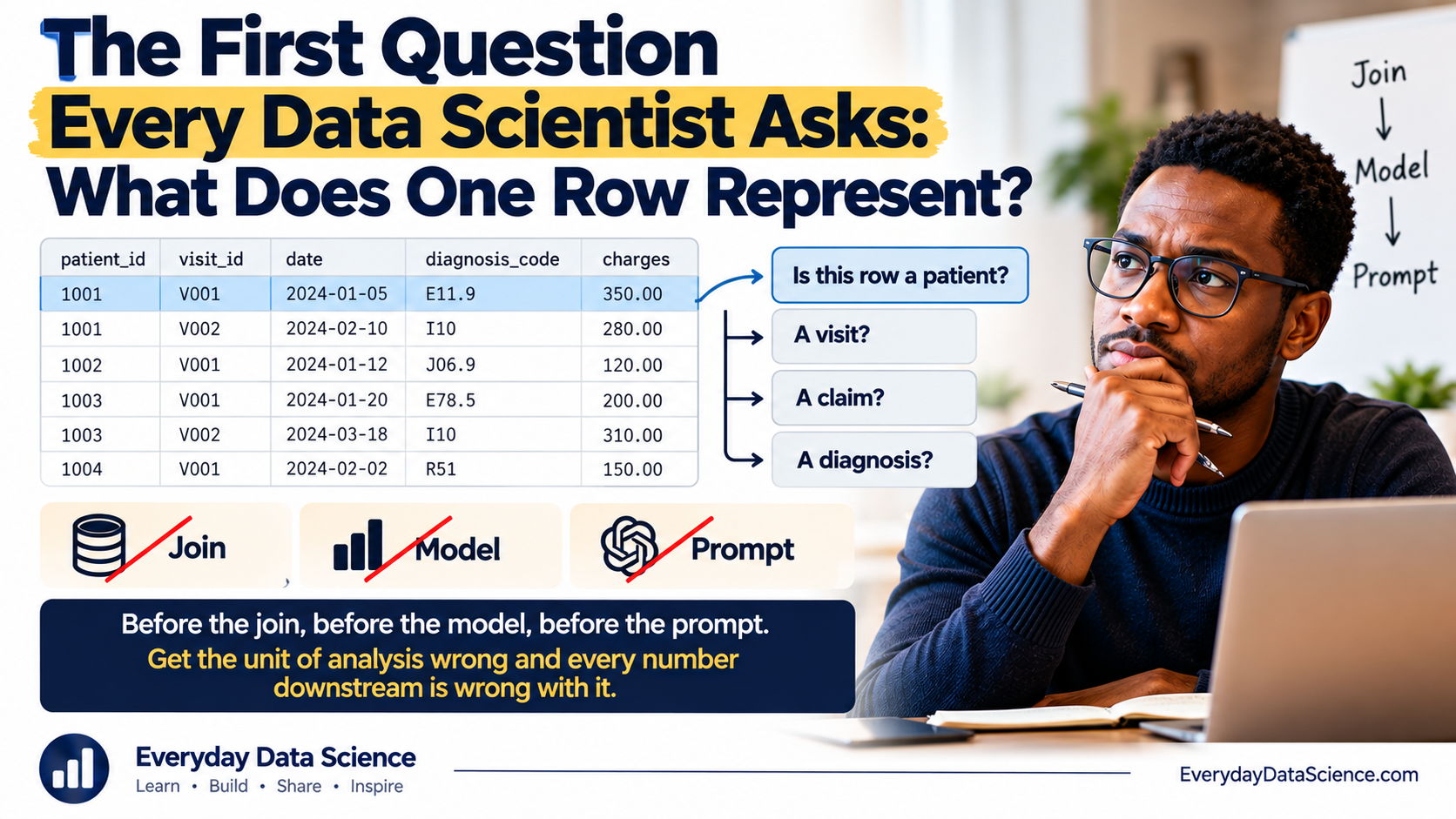
The First Question Every Data Scientist Asks: What Does One Row Represent?
A falling average order value triggered a discount review. The arithmetic was right and the table was wrong. Why the grain of a table decides whether every metric built on top of it is true.
- 2
Part 2 · 11 min
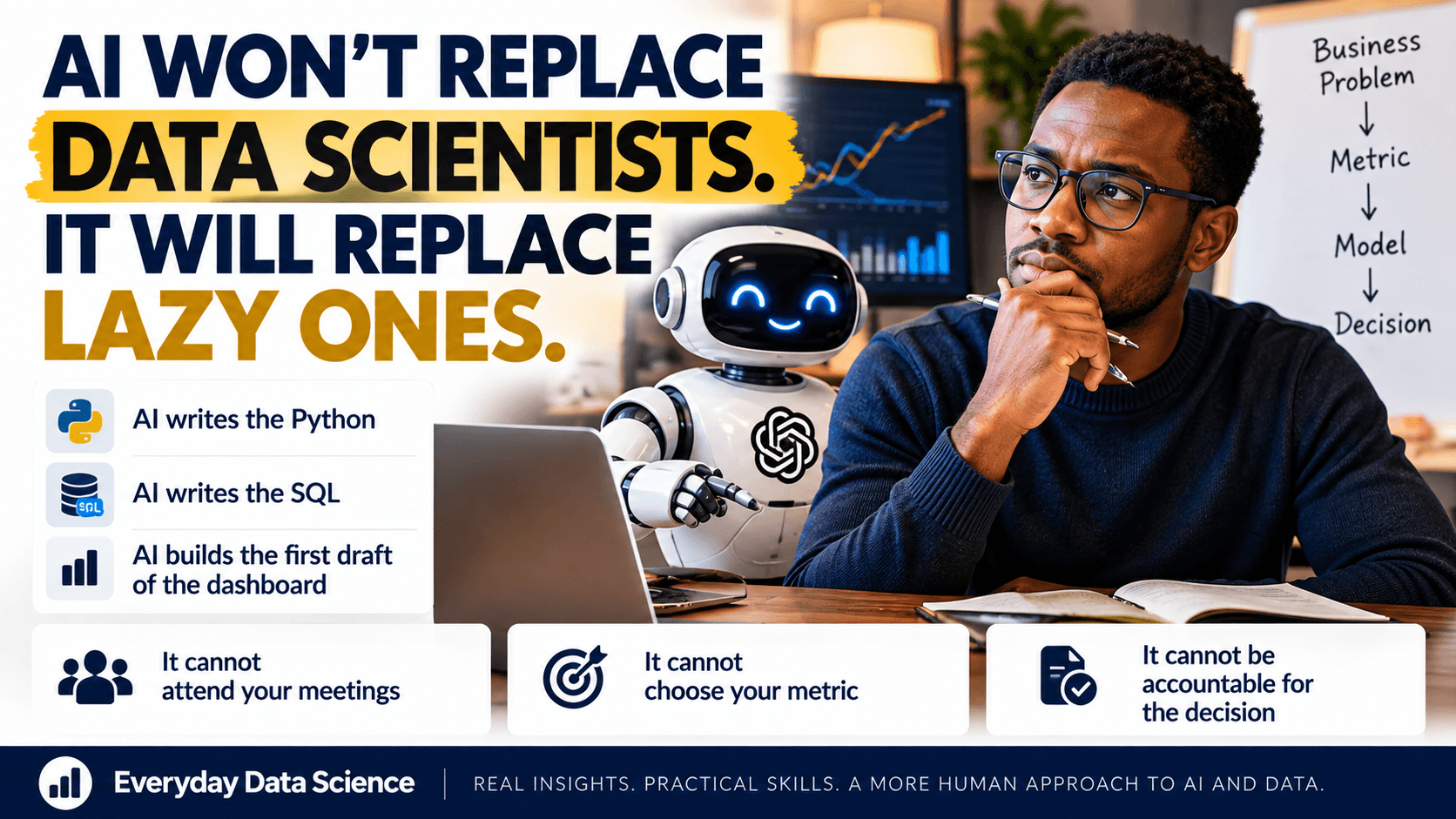
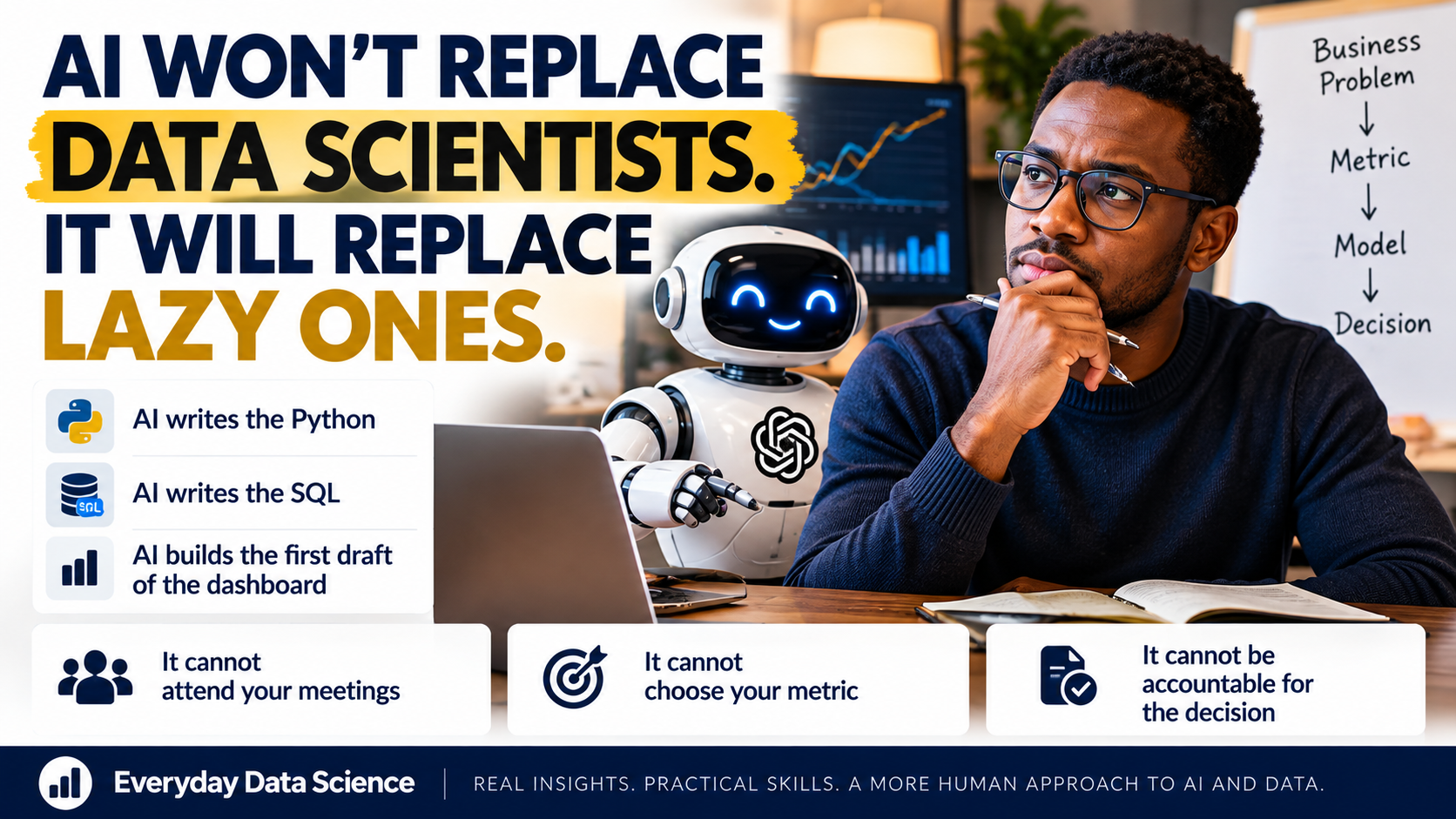
AI Won't Replace Data Scientists. It Will Replace Lazy Ones.
AI writes the Python, the SQL and the first draft of the dashboard. It cannot attend your meetings, choose your metric, or be accountable for the decision. A working division of labour, and a churn model that failed for none of the reasons you would expect.
- 3
Part 3 · 12 min
Before You Clean Your Data, Ask This One Question: Is It Actually Dirty?
A lender's income field was 23% empty, and the gap turned out to be the best feature in the dataset. Three mechanisms behind missing data, four diagnostics that tell them apart, and why cleaning is a provenance problem in disguise.